
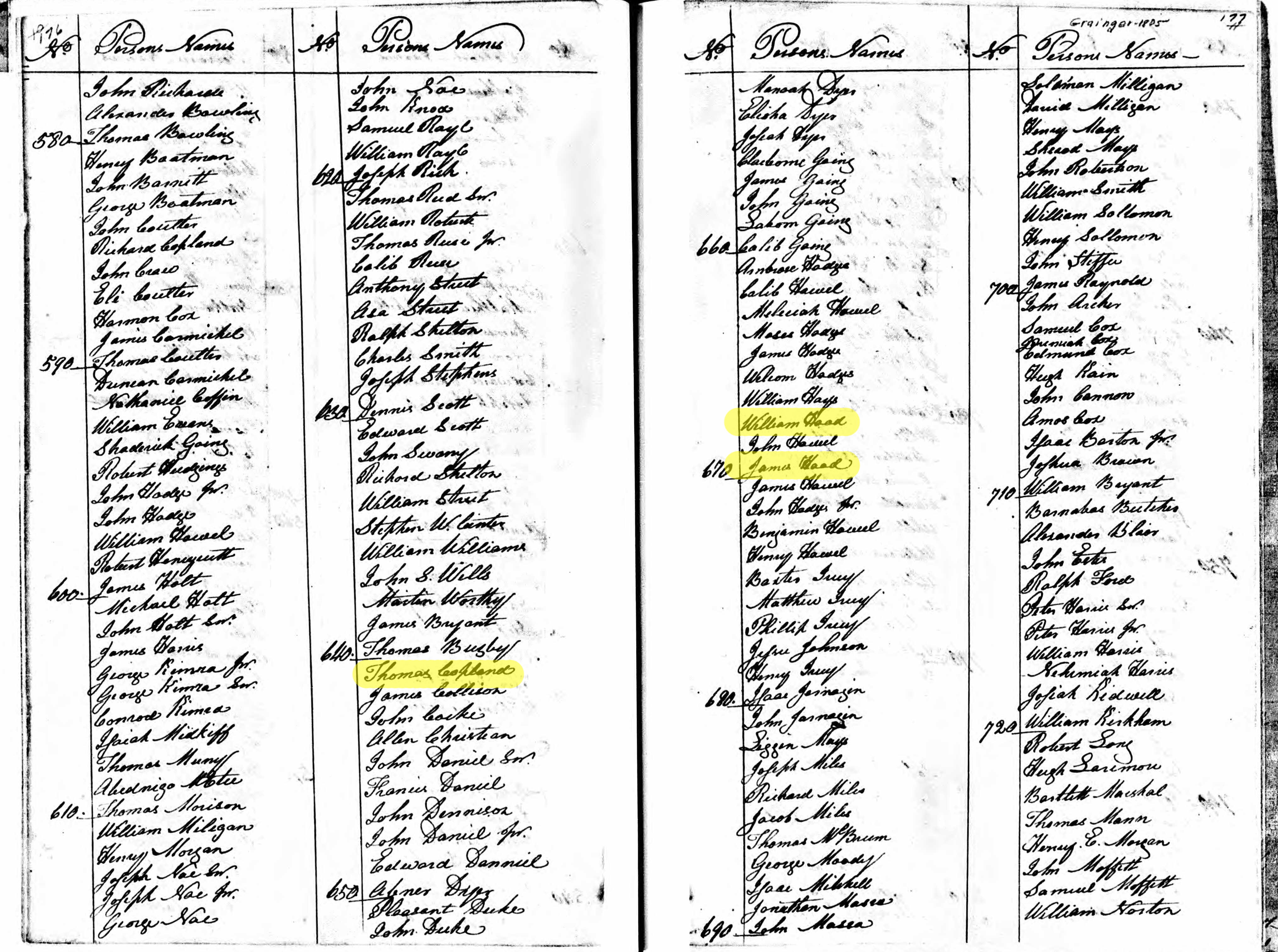
George T. Copeland’s grandparents, Thomas Copeland and Anna Hood, were married in Campbell County, Virginia in 1802. George’s father Obediah Copeland was born in Virginia in 1803, but by 1805 the family was living, along with Anna Hood’s father James Hood and her uncle William Hood, in Tennessee. They all appear there (along with Edmund Fears, who married Anna Hood’s sister Sarah Sally Hood) on the 1805 Tax List for Grainger County, Tennessee.
From Grainger County in east Tennessee, the family moved to what became known as Sims Settlement, located in modern-day Limestone County, Alabama (on the Tennessee border). The Limestone County Historical Society erected a marker there in 2012, which reads:
In the fall of 1806 a group of settlers, led by William and James Sims, traveled from east Tennessee on flatboats down the Tennessee River and up the Elk River to this area. They landed near Buck Island and spread out into the surrounding countryside, seeking homesites in what they thought was “government” land that would soon be for sale to settlers. The area they settled, covering several square miles, from Elk River to New Garden became known as “Sims Settlement.”

The Federal Government had settled the Cherokee claim to the area north of the Tennessee River in 1805, but the Chickasaw Nation maintained a claim to it until 1816. The settlement by the Sims party and others that continued to come to the area was illegal, and they became squatters or “intruders” on Indian land.
The growing number of white settlers entering the area alarmed the Chickasaws who threatened war if the U.S. Federal Government didn’t remove them. To avoid bloodshed and to placate the Chickasaws, the government sent troops into this area to remove the settlers. This first removal was in April and May of 1809. Most of the settlers returned as soon as the soldiers left, and so the problem continued.
In response, the government sent an ultimatum dated August 4, 1810 to the settlers that if they had not left all land west of the Chickasaw boundary by December 15, they would be removed by force. This boundary was surveyed in the fall of 1807, starting at Hobbs Island in Madison County and running diagonally to a point near Maury County in Tennessee. This boundary was the source of all the settlers problems because they were on the wrong side of it. Faced with the grave threat issued by the military, the settlers took the only action within their means.
On September 5th 1810, some 450 of them gathered at Sims Settlement and signed a lengthy letter or petition addressed to President James Madison and congress. In it they stated the honesty of their intentions, the strength of their character and made passionate pleas that they be allowed to stay. Even though they described the terrible condition they would be placed in, especially that of the widows and orphans among them, all their pleading fell on deaf ears however. The soldiers who were now stationed at the newly established Fort Hampton set about removing the settlers, burning the cabins and rail fences. This continued until 1817, and in 1818 land in Limestone County was finally offered for sale by the government.
The names of our ancestors can be found on both the intruders list and the petition. The following ancestors are listed as intruders on a list dated 27 May 1809: Thomas Copeland; William Hood, Sr.; William Hood, Jr.; James Hood; and Edmund Fears. They are all listed next to one another, and their close proximity to the founders of the settlement, William and James Sims, indicates that they were most likely among the original settlers. The Sims men were also from Grainger County in Tennessee, so it’s possible that our ancestors traveled along with them in the fall of 1806, as is described above.
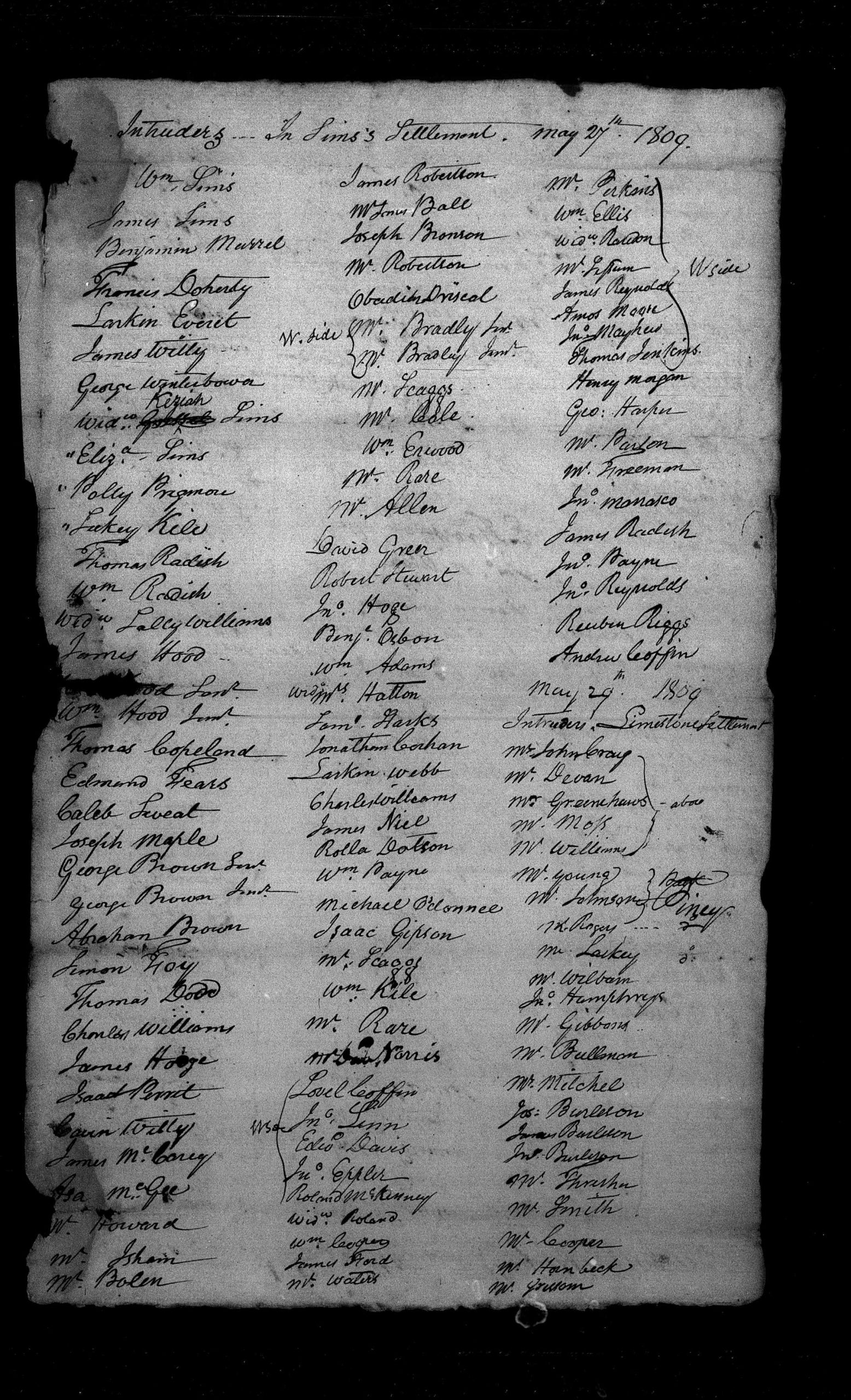
The Hoods and Edmund Fears appear again on the Sims petition, dated September 5, 1810, so they were likely among the settlers who were driven out by soldiers in 1809, only to return as soon as the soldiers were gone. We know from the marker that the second ousting of the settlers was not so pleasant, which would probably explain why our family re-located to Union County, Kentucky, where Anna Hood’s sister Susan married George Hedges in 1812 (Thomas Copeland signed as a witness), and eventually settled in Southeast Illinois.
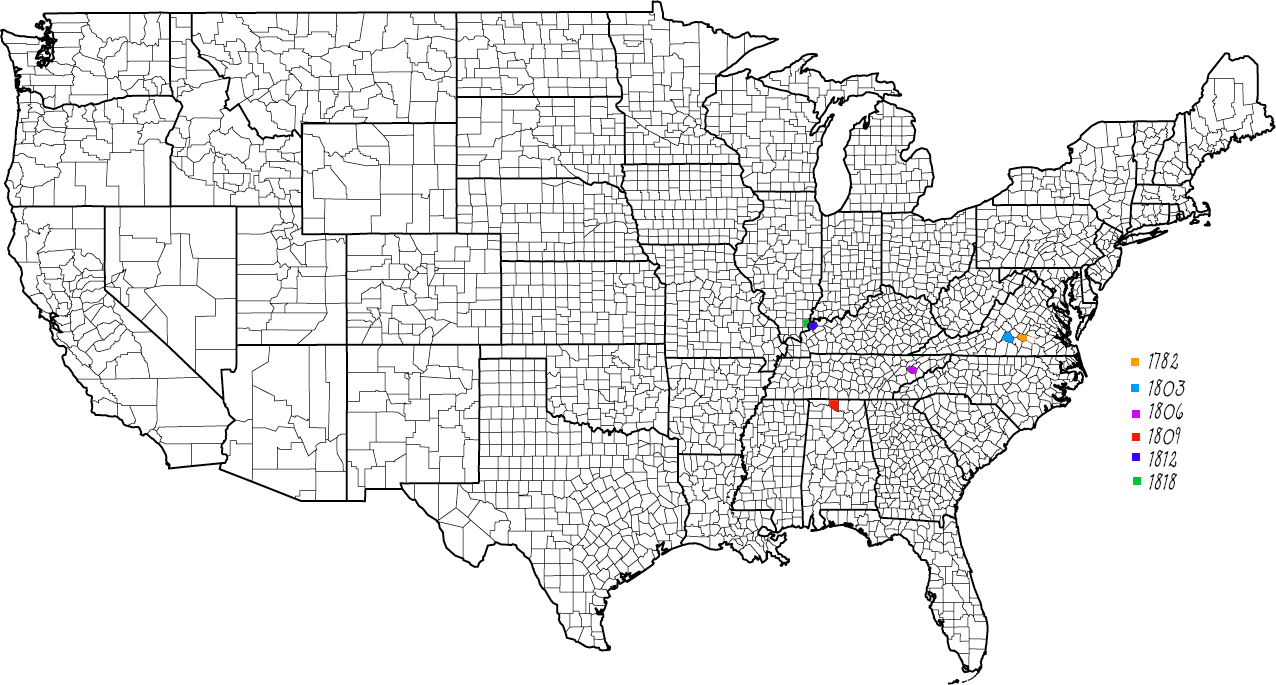
This is just a glimpse at a small window of time in our ancestors’ lives, but I find that the narrative really adds something to what can seem like very impersonal records. Our ancestors were certainly much more than names and dates; they were real people who faced adversity and struggled to find a place to call home on the frontier. At almost every step of their journey we find them living on the very edge of newly settled lands–from Alabama, to Illinois, to Missouri. We carry within us the DNA of real pioneers! I, for one, am happy that they persevered, and I hope that I inherited even a fraction of that strong spirit.
SELECTED SOURCES
“Sims Settlement,” Historical Marker Database, www.hmdb.org, 7/8/24
“Tennessee, United States records,” images, FamilySearch (https://www.familysearch.org/ark:/61903/3:1:3Q9M-CS5V-896D-B?view=explore : Feb 7, 2026), image 678 of 902; Image Group Number: 008274065